
The escalating conflict in West Asia widened on Monday as Israel launched airstrikes on Hezbollah targets in Beirut and other parts of Lebanon, following projectile fire from Lebanese territory into northern Israel. The Israeli Air Force (IAF) said in a series of posts on X that it carried out targeted strikes against senior members of Hezbollah in the Beirut area in response to the projectile fire launched toward Israel, particularly toward the north of the country.

A senior Iranian official has stated that Iran has not yet elected a successor to Supreme Leader Ayatollah Syed Ali Khamenei, following his assassination. The process to elect a new leader is underway, with several candidates being considered.

'Our diplomacy should have been focused on preventing war and avoiding the inevitable disruptions it would cause, posing a real risk to India's growth story,' asserts former foreign secretary Shyam Saran.

In the central Iranian city of Isfahan, residents gathered at Imam Square to protest the strikes and to mourn what state media termed the martyrdom of Ayatollah Khamenei. Demonstrators raised slogans including "God is great" as the airstrikes continued.

The intriguing bit is that Trump is likely to attend the talks in Islamabad this weekend -- if he does, it will be the clearest signal yet that the US is ready to exit the war with some sort of win to show, since he cannot afford to go for the talks and return empty-handed, notes Prem Panicker in his must read blog on the Iran War
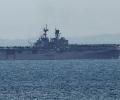
Although extensive air attacks have been carried out to destroy most of Iran's defence capabilities, the latter's resilience and sustenance during the war clearly indicate that the US landing force would encounter severe resistance in the operation, explains Commodore Venugopal Vengalil (retd).

The delegations from the US and Iran head to Islamabad on Friday, carrying a ceasefire that is already fraying, a Strait that is technically open and practically closed, and a negotiating agenda that would challenge even parties actually negotiating in good faith, which these groups are not. Prem Panicker continues his must read blog on the Iran War.

Israel wishes to continue its bombing campaign until Iran's military and industrial infrastructure are degraded to a point where it ceases to pose a threat to Israel. Iran, for its part, has learnt from its experience in the 12-day war of last June. Any ceasefire, it believes, will only be a prelude to another attack on itself. It is determined to convey that any attack on Iran will impose heavy costs on Israel, the US, America's allies in the Gulf -- and on the world at large, points out T T Ram Mohan.

The Indian government has revised its natural gas allocation priorities, placing LPG production alongside CNG and piped cooking gas at the top, due to disruptions in imported gas supplies caused by the conflict in West Asia.

The escalating conflict involving the U.S. and Israel with Iran has led to widespread disruption in the world of sports, with events postponed, travel plans thrown into chaos, and athletes seeking asylum.

Union Home Minister Amit Shah is expected to respond to the debate on the no-confidence motion against Lok Sabha Speaker Om Birla, following allegations of partisan conduct. The motion, moved by opposition members, questions Birla's impartiality and handling of House proceedings.

A new study by AI firm Anthropic reveals that while AI hasn't caused widespread unemployment, it has slowed hiring for younger workers in AI-exposed roles. The study also highlights the gap between AI's theoretical capabilities and actual deployment, and the ongoing conflict between Anthropic and the US government over AI weaponisation.

Israel and the United States had a plan. Iran punched back. And now the Gulf is reeling, the world is beginning to feel the pain and, as on date, no one in Washington or Tel Aviv appears willing to admit that the punch has landed, notes Prem Panicker, continuing his must-read blog on the war in the Middle East.
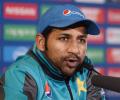
The Pakistan Cricket Board (PCB) is reportedly offering the head coach position for the Test team to former captain Sarfaraz Ahmed, potentially making him the youngest person to hold the role.

'When there is such an elaborate and a strong process, one would have expected anyone to either place the issues so that they can be addressed or go to the regulator and probably tell them rather than creating a kind of uncertainty for the stakeholders.

Finance Minister Nirmala Sitharaman announces increased domestic LPG production to offset import disruptions caused by Middle East tensions, alongside assurances of fertiliser availability and the clearing of UPA-era oil bonds.
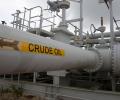
MEA spokesperson Randhir Jaiswal said India's energy decisions are guided by national interest.

India-based Iranian actresses Mandana Karimi and Elnaz Norouzi share their deep concerns and anxieties about the escalating crisis in Iran, and reveal the personal toll on their lives and the Iranian diaspora.
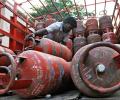
Former Haryana Chief Minister Bhupinder Singh Hooda criticises the state government over alleged LPG cylinder shortages and black marketing, urging immediate action to alleviate public hardship. He also addresses concerns regarding farmers' MSP and the SYL canal issue.

Alliances fight wars effectively only when they share an endgame. If Israel acted without US knowledge, then the military alliance is operating without real coordination at the level of strategic targeting. Neither picture is reassuring in a war that is no longer regional in its consequences. Prem Panicker continues his must read daily blog on the Gulf War.

If the Iranian regime needs to be punished for promoting quasi-terrorist outfits like Hezbollah and Hamas, then what about Pakistan which has spent decades exporting terror around the world, killing thousands, particularly in Afghanistan and India? asks M R Narayan Swamy.

Despite international crude oil rates crossing USD 100 per barrel due to Middle East tensions, the Indian government plans to maintain current petrol and diesel prices, ensuring uninterrupted fuel supply across the country.

Cautioning that West Asia today stood at a crossroads, India Monday said largescale extra regional military presence and rising constituency of radical religious groups in the region was a matter of grave concern.

The 'rescue' operation occurred within kilometres of Iran's underground tunnel complex at Isfahan, assessed by the IAEA and US intelligence as holding a substantial portion of the country's 60 per cent enriched uranium stockpile. Retired senior US military officers have highlighted that the mission's footprint -- hundreds of special operators, multiple heavy-lift aircraft deep inside Iran -- appears outsized for recovering a single airman. Prem Panicker continues his must read blog on the Iran War.

Iran has rejected United States allegations that it is preparing attacks on American facilities, alleging that Washington, DC is attempting to escalate tensions in West Asia, Iranian state broadcaster Press TV reported.

This weekend, Donald Trump has begun to say the quiet part out loud -- that he wants to take control of Iran's oil, a formulation more in line with his robber-baron style of international relations.
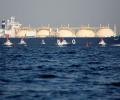
Analysts predict India will face oil price volatility and macroeconomic effects due to the escalating Iran crisis, though the country's oil supply chain is not yet structurally insecure.
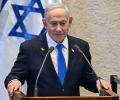
Prime Minister Narendra Modi and Israeli Prime Minister Benjamin Netanyahu discussed ways to strengthen the strategic partnership between India and Israel, focusing on peace efforts in West Asia and condemning terrorism.

'Oil is still well below its all-time highs, and the world is gradually running out of known reserves.'

'There is no shortage of fuel whatsoever.' 'India is stock surplus as far as petrol and diesel are concerned.'

Iran launched retaliatory military strikes targeting Israel and American military bases across the region, including in Qatar, the United Arab Emirates, Kuwait, Bahrain and Jordan.
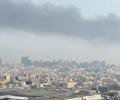
Following a joint attack by the US and Israel on Iran, India is calling for restraint and de-escalation to avoid further military confrontation in the Middle East.

New Zealand's Matt Henry experienced a week of highs and lows, from witnessing the birth of his son to delivering a match-winning performance in the T20 World Cup semi-final against South Africa.
'We are profoundly energy-dependent on the Gulf. That dependency must now be redirected towards the United States, because we require American permission to procure oil.' 'We additionally require Iranian permission to acquire oil from that source. So India now has to seek two separate permissions merely to secure its energy supply.' 'Should we be compelled to source from America, or from Venezuela -- which is, in effect, American-controlled supply -- that will inevitably carry a price premium, an elevated shipping cost, and a considerably extended delivery timeline, given the distances involved.'

'Was the five-day pause ever meant to hold, or was it simply another instrument of signaling, of positioning, of buying time in a war where even the pauses are tactical?' asks Prem Panicker in his must read daily blog on the Gulf War.

India should resist knee-jerk responses to tariff volatility in the US and instead use the current geopolitical churn to build manufacturing scale at home, former G20 Sherpa and former chief executive officer of NITI Aayog Amitabh Kant said on Wednesday.

Over the years, India-EU ties have grown, and covered trade, investment, climate change, science and technology, space, digital, mobility, and connectivity.

"A number of Indian IT companies that were looking at long-term investments in the region, as a second and third level investment zone, will have to now re-look plans," said Ameet Nivsarkar, vice-president for global trade and development, National Association of Software and Services Companies (Nasscom).
 © 2026 Rediff.com - Advertise with us - Disclaimer - Privacy Policy - Sitemap - Feedback - About us - Terms of use - Grievances